01
Answer a short set of questions
Rate how accurately each statement describes you. The questions are clear and straightforward — no hypothetical scenarios. Most people finish in about 6 minutes.
A research-backed map of all 16 personality traits, plus your Big Five snapshot, free when you finish. Go deeper with five advanced reports if you want them.
80 questions · about 6 min · free results · optional $29 reports
Example of the test with two sample test-takers, Sam and Camille: each answer, from very inaccurate to very accurate, moves one trait on the 16-trait map.
Trusted by 30,000+ professionals


Your results are free. The five advanced reports are an optional one-time $29.
Big Five Profile
A clear read on your overall personality structure across the five core traits.
Career Orientation
The environments, roles, and motivations that fit your natural tendencies.
Work Style
How you handle autonomy, structure, collaboration, and pace.
Relationships & Communication
How others experience you, and where misunderstandings tend to start.
Stress & Emotional Adjustment
What pushes you into reactive mode, and how to stay grounded.
One-time payment · No subscription · 7-day money-back guarantee
Most popular quizzes sort you into one of a handful of types. Real people are more nuanced than that.
The 16-factor model captures the primary traits behind everyday behavior, so your profile reflects you — not a box.
Note: No personality test is a perfect measurement. We use a 16-factor model because it captures more useful nuance than type-based quizzes while staying clear enough to act on.
Sixteen independent traits describe the full range of how you operate, instead of forcing you into one of four or sixteen rigid categories.
The 16 primary factors come from decades of trait research into the structure of personality and remain a benchmark in the field.
Each factor maps to concrete situations — how you handle pressure, lead, collaborate, and make decisions — so the result is usable.
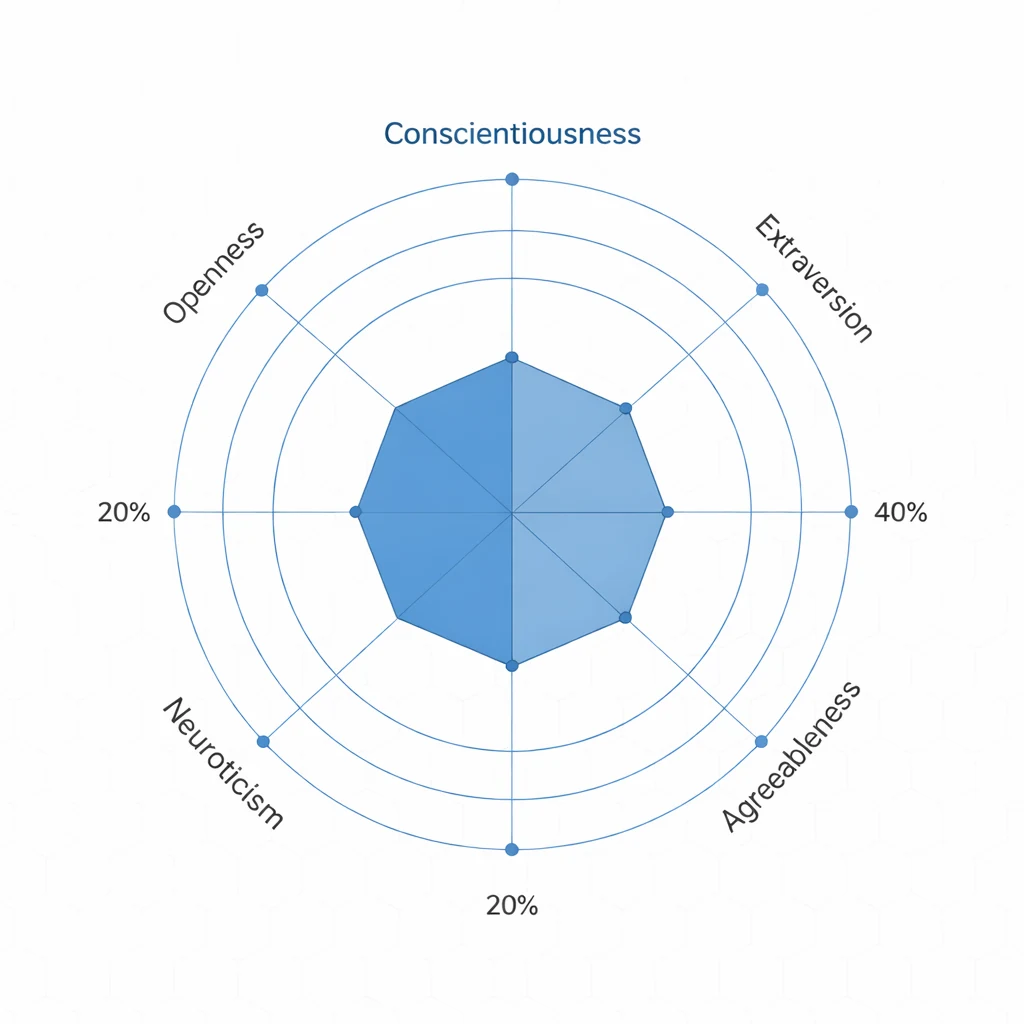
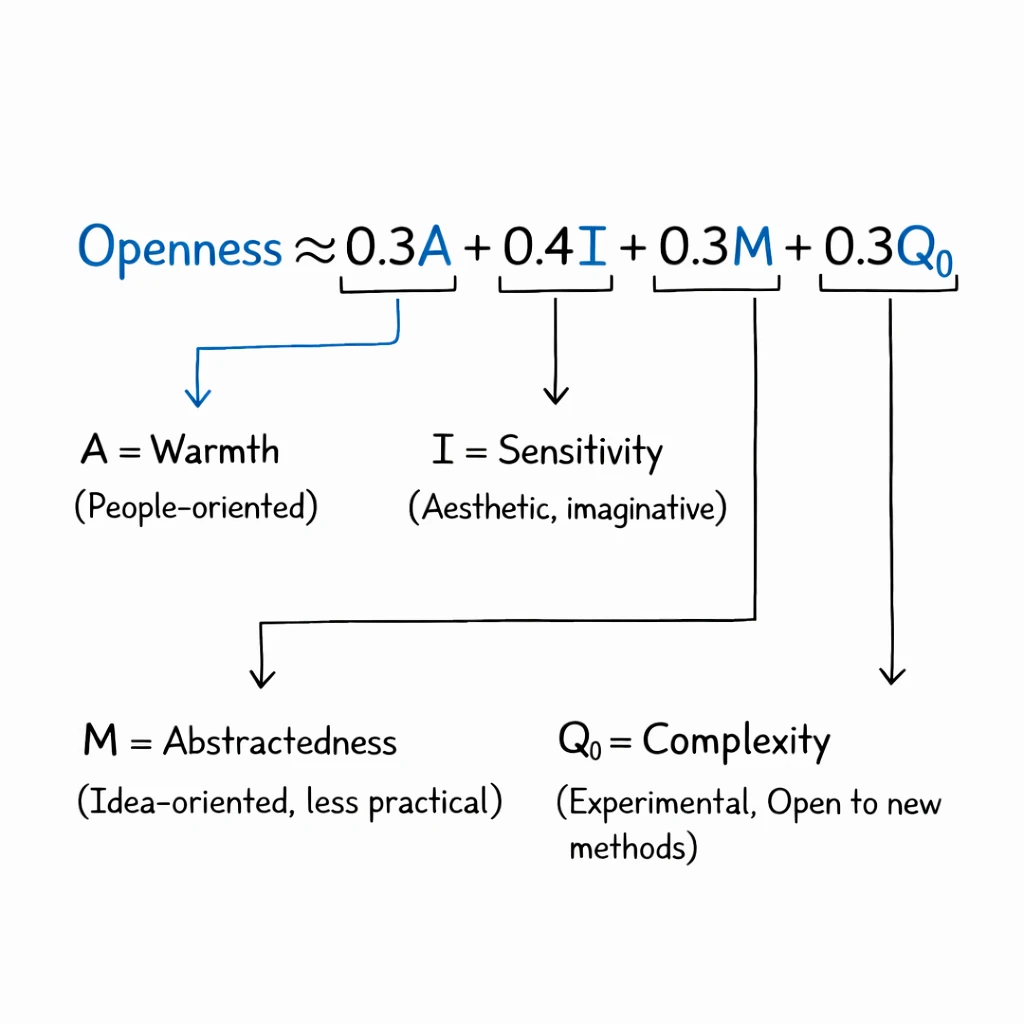
Combine the primary factors and they roll up into the five global traits known as the Big Five — so you get the familiar, research-respected dimensions and the detail underneath them.
Explore the Big Five personality traitsExtraversion
Neuroticism
Openness
Agreeableness
Conscientiousness
Each trait is a scale between two poles, not a pass or fail. Your trait map shows where you sit on all 16.
Reserved , Warm
Reserved: Keeps some distance and warms up slowly; prefers tasks to small talk.
Warm: Easily invested in people; attentive and generous with time.
Concrete , Abstract
Concrete: Prefers practical, proven methods and learns best by doing.
Abstract: Quick to spot patterns and enjoys working with ideas and theory.
Reactive , Stable
Reactive: Feels setbacks strongly; mood shifts with events.
Stable: Stays steady under pressure and recovers quickly from setbacks.
Deferential , Dominant
Deferential: Avoids conflict and readily goes along with others.
Dominant: States views firmly, takes charge, and pushes for their way.
Serious , Lively
Serious: Careful and measured; thinks before speaking.
Lively: Spontaneous and energetic; enjoys fun and stimulation.
Expedient , Rule-Conscious
Expedient: Bends rules when they get in the way of results.
Rule-Conscious: Respects standards and procedures, and expects others to.
Shy , Socially Bold
Shy: Hesitant in front of groups and new people.
Socially Bold: Comfortable speaking up, meeting strangers, and taking the stage.
Utilitarian , Sensitive
Utilitarian: Decides on facts and practicality, not feelings.
Sensitive: Guided by taste, empathy, and how a decision feels.
Trusting , Vigilant
Trusting: Takes people at their word and expects good intentions.
Vigilant: Questions motives and looks for what might go wrong.
Grounded , Abstracted
Grounded: Focused on the here and now and on practical details.
Abstracted: Often absorbed in ideas, imagination, and the bigger picture.
Forthright , Private
Forthright: Open and direct about thoughts and feelings.
Private: Discreet; shares personal matters with few people.
Self-Assured , Apprehensive
Self-Assured: Confident and rarely second-guesses choices.
Apprehensive: Prone to worry and self-doubt; anticipates problems.
Traditional , Open to Change
Traditional: Values proven ways and is wary of change for its own sake.
Open to Change: Enjoys experimenting and questioning how things are done.
Group-Oriented , Self-Reliant
Group-Oriented: Prefers to decide and work alongside others.
Self-Reliant: Prefers to work things out alone and own the outcome.
Flexible , Perfectionist
Flexible: Comfortable with loose plans and some disorder.
Perfectionist: Organized and thorough, with high standards for detail.
Relaxed , Tense
Relaxed: Patient and easygoing, even when things stall.
Tense: Driven and restless; quickly frustrated by delays.
01
Rate how accurately each statement describes you. The questions are clear and straightforward — no hypothetical scenarios. Most people finish in about 6 minutes.
02
Add your first name and email at the end, and your scores across all 16 factors appear right away as a radar chart, with your Big Five snapshot. No waiting.
03
If you want to know what your scores mean in practice, five advanced reports ($29, one-time) cover your Big Five profile, career direction, work style, relationships, and stress.
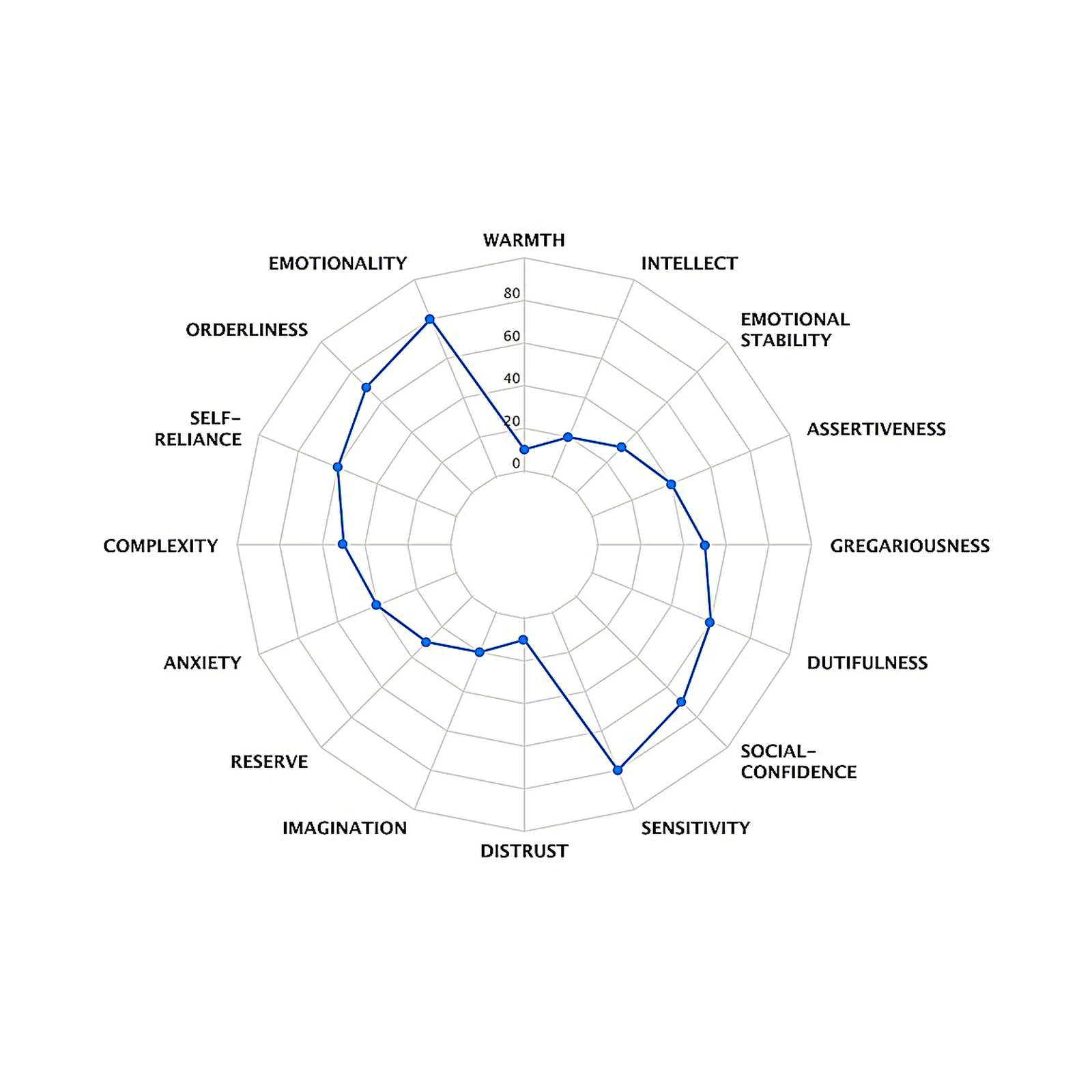
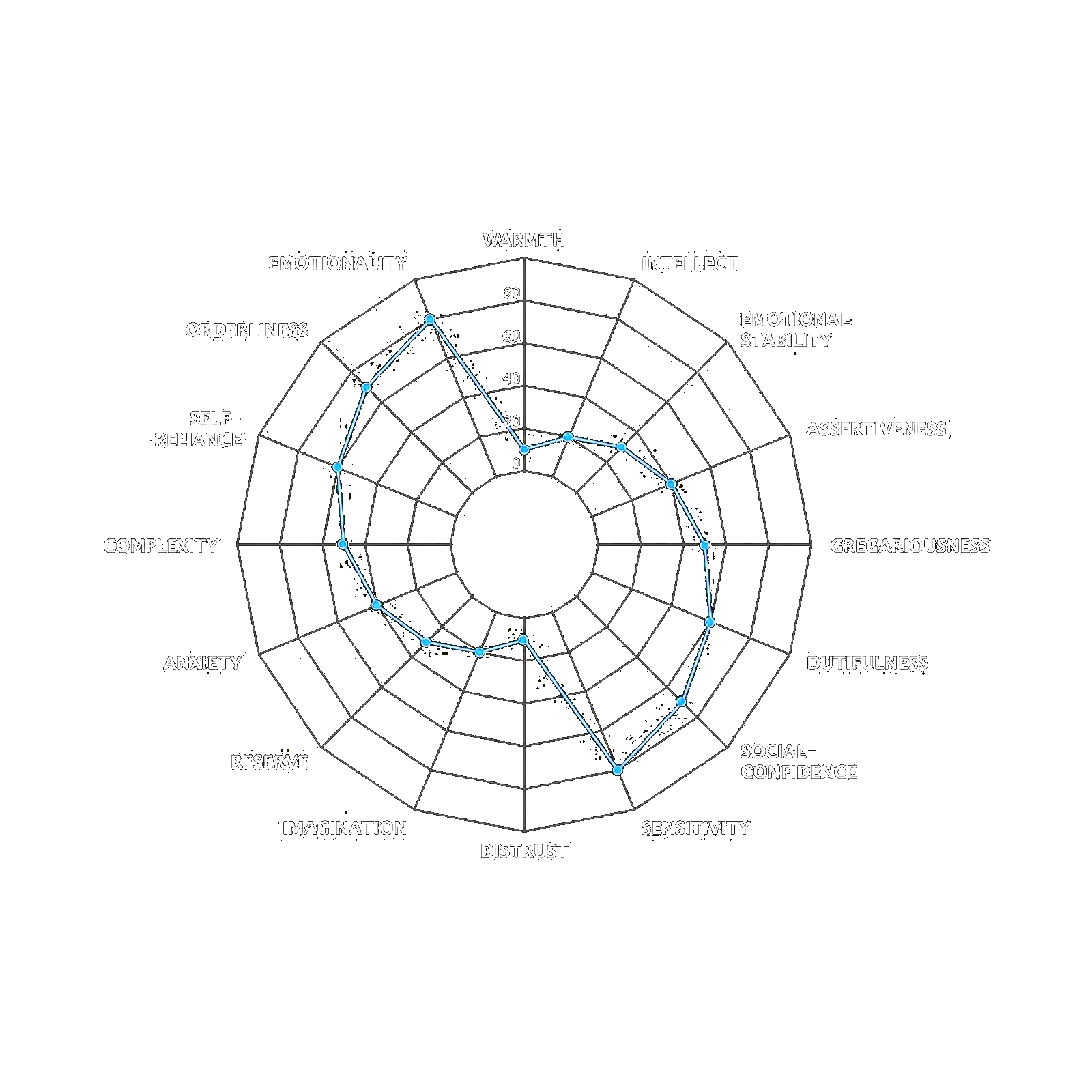
Your free test turns your answers into a clear visual chart. It maps your 16 traits and your Big Five so you can take in your whole profile in one look.
Trusted by professionals, researchers, and students worldwide.
The 16-factor test is our most complete personality profile. If you want to measure something more specific — your emotional intelligence, character strengths, or career fit — every PersonalityHQ assessment is free to start.
24 traits · ~8–10 min
A visual 24-trait personality test across six dimensions, including Integrity. Results as a chart you can save and share.
16 traits · ~8 min
Measure your emotional quotient across 16 traits and 6 dimensions — self-awareness, empathy, regulation, and more.
24 strengths · ~10 min
Rank 24 character strengths and find your top 5 — who you are at your best.
20 facets · career-focused
A 20-facet career profile: the strengths that matter at work and the roles where they compound.
4 core traits · ~8 min
Map the four core traits behind your emotional reactions, impulse patterns, and decision style.
Yes. The test is free, and so are your 16-factor scores and Big Five snapshot. An optional one-time payment of $29 unlocks five advanced reports: Big Five profile, career orientation, work style, relationships and communication, and stress and emotional adjustment.
Most people finish in about 6 minutes. There are no right or wrong answers — just respond honestly and go with your first instinct.
It measures 16 primary personality traits, also called the 16 personality factors — core traits such as Warmth, Emotional Stability, Dominance, Social Boldness, Sensitivity, Openness to Change, and Perfectionism — that together describe how you think, work, and relate.
The 16-factor structure is based on decades of trait research into the building blocks of personality. No assessment is a perfect measurement, but a 16-factor model captures far more nuance than type-based quizzes.
No account is needed. We ask for your first name and email at the end so we can save your results. Unlocking the advanced reports afterward is optional.
See where you land on each of the 16 traits and what it means for your focus, decisions, and relationships.
Free results first. Upgrade only if you want the full report.